Research

3 researchers survey fish from a boat on the Illinois River

Research

IRBS staff are actively involved in a variety of applied research efforts focused on large river systems. From long-term monitoring to targeted field studies, these projects support conservation, restoration, and management decisions across Illinois’ waterways.

Invasive Carp Removal & Monitoring in the Upper Mississippi River

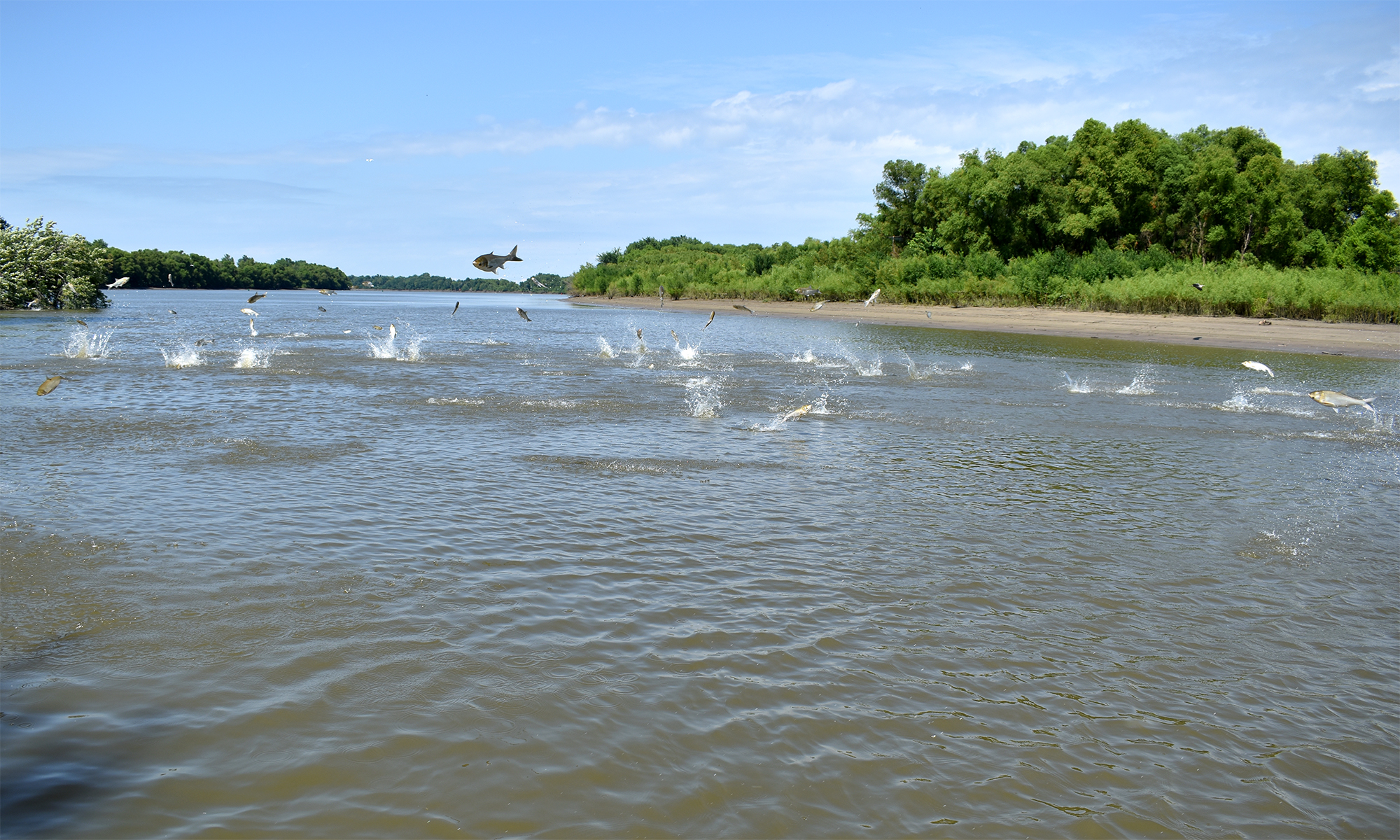
IRBS works in Pools 14 through 19 of the Upper Mississippi River to reduce invasive carp densities and slow their upstream expansion. Crews contract commercial fishers to remove bighead and silver carp using telemetered fish and experience-based targeting. Staff also monitor for signs of reproduction using larval light traps and track fish passage at key locks and dams. These efforts help set a baseline for long-term monitoring and give biologists a clearer picture of where control strategies are most effective.

Visit the Invasive Carp Removal & Monitoring in the Upper Mississippi River page.

The Emiquon Preserve

IRBS has monitored fish communities at Thompson Lake since 2007 as part of the long-term restoration efforts at the Emiquon Preserve. In addition to fish sampling, crews also monitor aquatic vegetation at both Thompson and Flag lakes throughout the growing season. They use a range of gear types to track changes in species composition and habitat use over time. The work supports efforts by The Nature Conservancy to evaluate restoration success and manage the site using science-based benchmarks.

Visit the Emiquon Preserve page.

Hoop Netting for Invasive Carp

IRBS is working to improve the detection of black carp in the lower Illinois River using hoop nets baited with a range of experimental and control baits. This project focuses on determining which baits are most effective and where black carp are typically found. Because this species is rarely caught, every piece of data helps researchers understand how many are present and what risk they pose to native mussel populations.

Visit the Hoop Netting page.

Multi-Agency Monitoring Program

In 2019, IRBS and partner agencies took advantage of a scheduled months-long closure of locks along the Illinois Waterway to study the ecological effects of halting large vessel traffic. The resulting Multi-Agency Monitoring (MAM) program expanded fish and water quality monitoring along nearly 500 kilometers of river. This rare opportunity provided a broader view of how navigation traffic affects fish communities and provided new data to support future monitoring and management efforts.

Visit the Multi-Agency Monitoring Program page.

Long Term Resource Monitoring element (LTRM)

As part of the Upper Mississippi River Restoration Program, IRBS collects long-term data on fish, vegetation, water quality, and invertebrates in the La Grange Reach. Crews use consistent field methods each year to compare results over time and across other stations. The data help researchers and agencies track how the river changes and guide their responses to those changes.

Visit the Long Term Resource Monitoring Element (LTRM) page.

Long Term Survey & Assessment of Large River Fish in Illinois (LTEF)

Each year, IRBS staff conduct fish population surveys on some of Illinois’ largest rivers using the same proven methods across sites. The data reveals how fish communities respond to long-term environmental shifts across the state’s river systems. With roots dating back to the 1950s, LTEF remains one of Illinois’ most established fisheries datasets and plays a vital role in directing resource management.

Visit the Long Term Survey & Assessment of Large River Fish in Illinois (LTEF) page.

The Whooshh Project

In partnership with the Illinois Department of Natural Resources (IDNR), The Nature Conservancy, and Whooshh Innovations, IRBS began testing a mobile fishway system at the Emiquon Nature Preserve in 2020. The system uses a scanner with artificial intelligence that identifies fish in real time, directing native species past barriers while limiting the movement of non-native species. Researchers are evaluating whether this approach could offer a new method for selective fish passage in floodplain systems.

Visit the Whooshh Project page.

The Rock River Shovelnose Sturgeon Assessment

IRBS is conducting year-round research on shovelnose sturgeon in the Rock River to better understand their population structure, movement, and habitat use. The project integrates mark/recapture surveys and acoustic telemetry to examine demographics, growth, survival, and fish movement between river reaches. The research aims to support long-term management by filling significant gaps in what is currently known about this species in Illinois.

Visit the Rock River Shovelnose Sturgeon Assessment page.

Illinois River Biological Station
704 N Schrader Avenue
Havana, IL 62644-1055
309-543-6000
PRI Staff Login Log In